

Low carb breakfasts get a bad reputation for being boring or leaving you hungry an hour later—but that doesn’t have to be the case. The secret isn’t eating less; it’s eating smarter. With the right ingredients, textures, and balance, low carb breakfasts can feel cozy, filling, and deeply satisfying.
Whether you’re cutting carbs for energy, focus, or lifestyle reasons, this guide will help you build breakfasts that actually keep you full and happy.
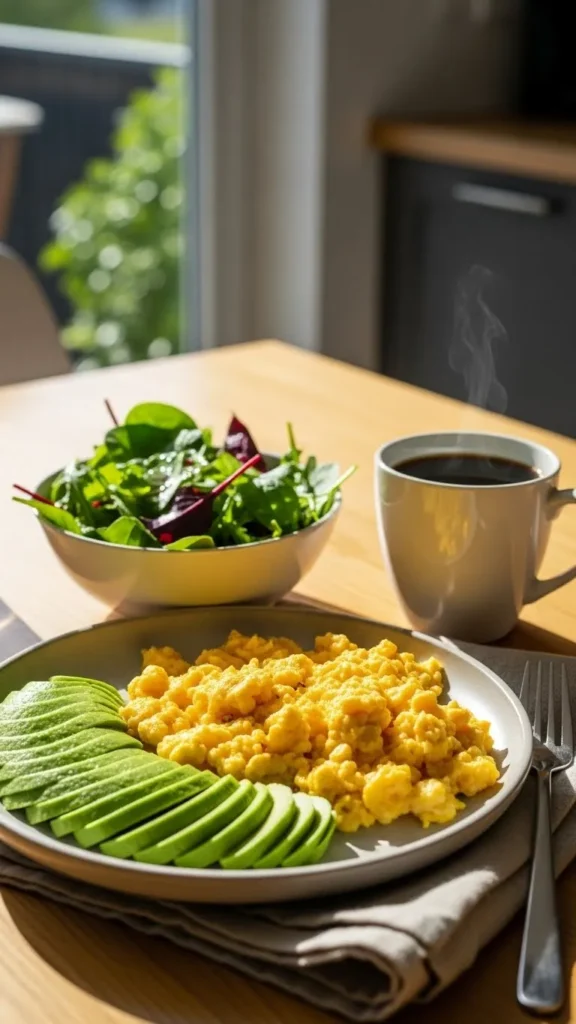
Start With a Satisfying Low Carb Foundation
If your breakfast feels skimpy, it usually starts at the base. Low carb meals need a strong foundation that replaces what carbs normally provide: fullness and comfort.
Instead of toast or cereal, build your plate around:
- Eggs (scrambled, baked, or folded into bowls)
- Plain Greek-style yogurt or cottage-style options
- Tofu or egg alternatives
- Chia or flax-based mixtures
These ingredients are naturally low in carbs and rich in protein or healthy fats, which help you feel full longer.
Tip:
Cook eggs slowly and gently. Creamy textures feel more indulgent and satisfying than dry, rushed eggs.

Add Healthy Fats for Lasting Fullness
Low carb breakfasts feel satisfying when they include enough fat. Fat slows digestion, keeps blood sugar steady, and gives meals that comforting “stick-to-your-ribs” feeling.
Great low carb fat options include:
- Avocado slices or mash
- Olive oil or avocado oil
- Nuts and seeds
- Full-fat dairy options (if they work for you)
Don’t be afraid to drizzle, sprinkle, or spread—just aim for balance, not overload.
Quick combo idea:
Eggs + avocado + sautéed greens = simple, filling, and carb-light.
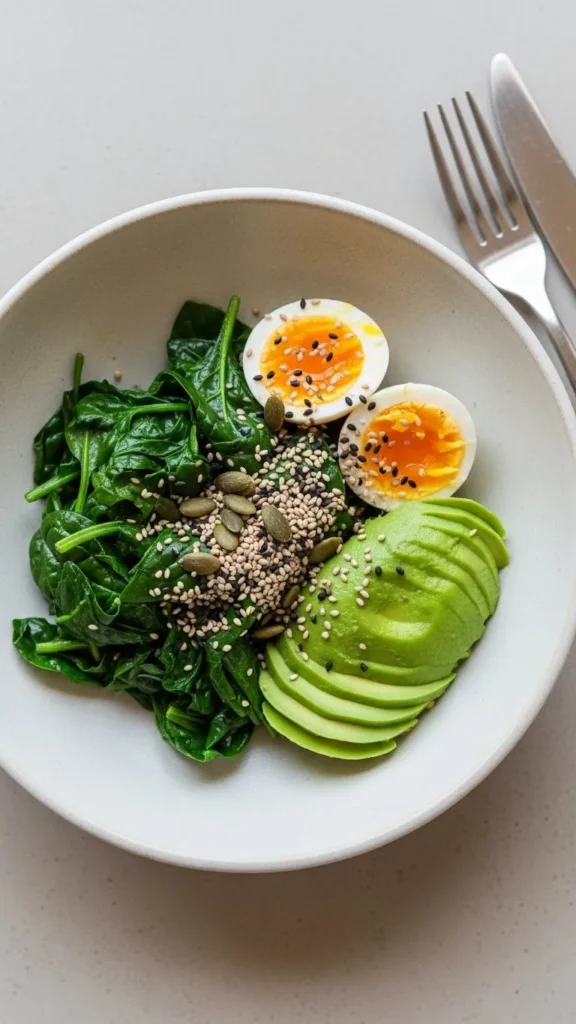
Use Volume From Low Carb Vegetables
One reason carb-heavy breakfasts feel filling is volume. You can recreate that effect with vegetables that are low in carbs but high in fiber and water.
Best breakfast-friendly options:
- Spinach or kale
- Mushrooms
- Zucchini
- Bell peppers
- Tomatoes (in moderation)
Cooked vegetables shrink and blend easily into eggs, bowls, or bakes, adding bulk without adding many carbs.
Pro tip:
Roast or sauté vegetables before adding them to breakfast dishes. Warm, caramelized flavors feel more satisfying than raw crunch.
Build Texture So It Feels Comforting
Texture matters more than most people realize. A satisfying breakfast usually has contrast—soft plus crunchy, creamy plus fresh.
Try combining:
- Creamy elements (eggs, yogurt, avocado)
- Crunchy toppings (nuts, seeds)
- Warm components (sautéed veggies)
- Fresh accents (herbs, greens)
Even a simple breakfast feels more filling when it’s interesting to eat.
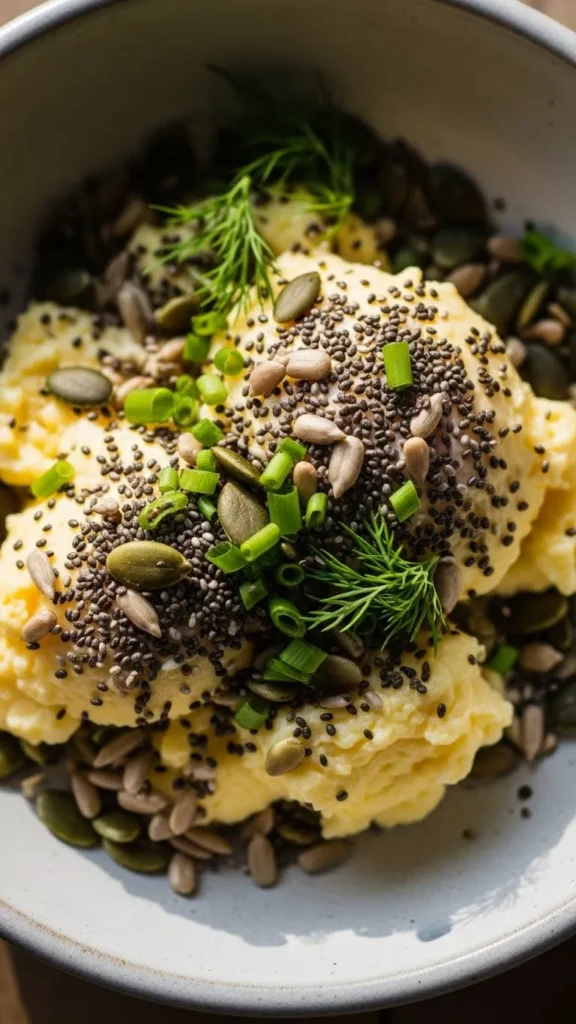
Make Low Carb Breakfasts Feel Like a Treat
If breakfast feels like a chore, it won’t satisfy you—no matter how balanced it is. The key is making low carb meals feel intentional and enjoyable, not restrictive.
Easy ways to elevate breakfast:
- Use your favorite plate or bowl
- Add fresh herbs or spices
- Sit down instead of eating on the go
- Keep portions generous but balanced
You don’t need complicated recipes. You need meals that feel warm, filling, and worth eating.
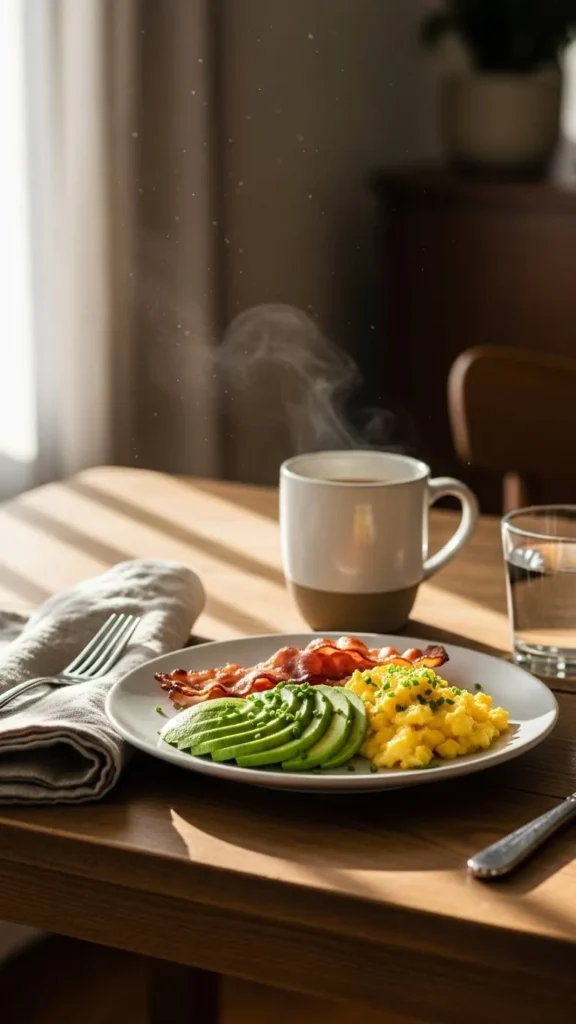
Simple Low Carb Breakfast Combos That Work
When you don’t want to think too much, these combinations are reliable and satisfying:
- Eggs + sautéed vegetables + avocado
- Yogurt-style base + nuts + seeds
- Vegetable egg bake slices for busy mornings
- Warm veggie bowls topped with eggs
Prep ingredients ahead of time so mornings feel easy, not rushed.
Final Takeaway: Low Carb Can Still Feel Comforting
Low carb breakfasts don’t have to feel light, boring, or unsatisfying. When you focus on protein, healthy fats, volume from vegetables, and comforting textures, your breakfast can keep you full and energized for hours.
The goal isn’t to eat less—it’s to eat in a way that actually works for your body.
Save this guide for later and come back when you need fresh breakfast inspiration!

Leave a Reply