

There’s something magical about French toast done just right—crispy edges, a soft custardy center, and that warm, buttery aroma filling the kitchen. If yours has ever turned out soggy, dry, or unevenly cooked, don’t worry. A few small tweaks make all the difference.
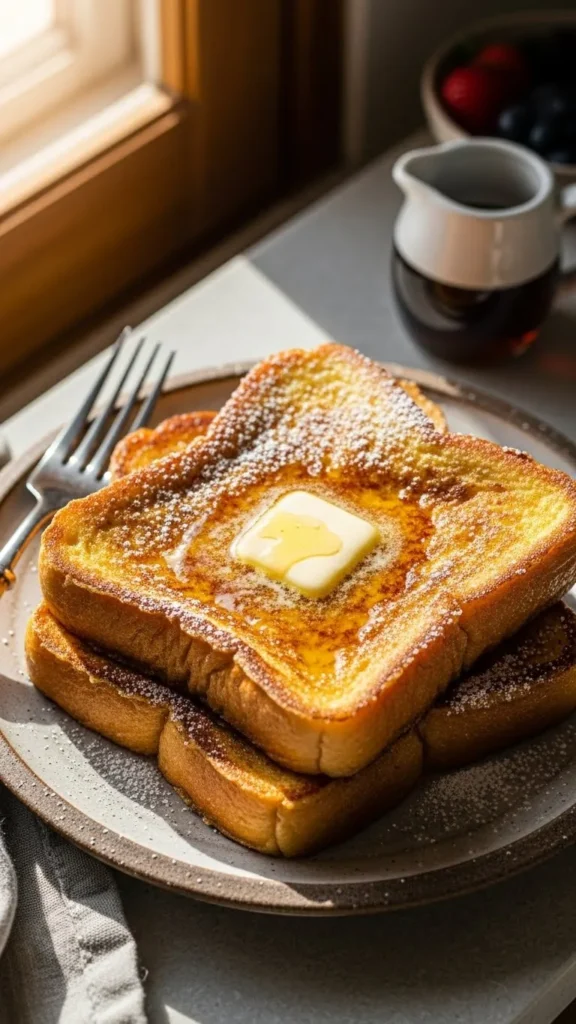
This guide walks you through every step so your French toast turns out café-worthy every single time.
Start With the Right Bread
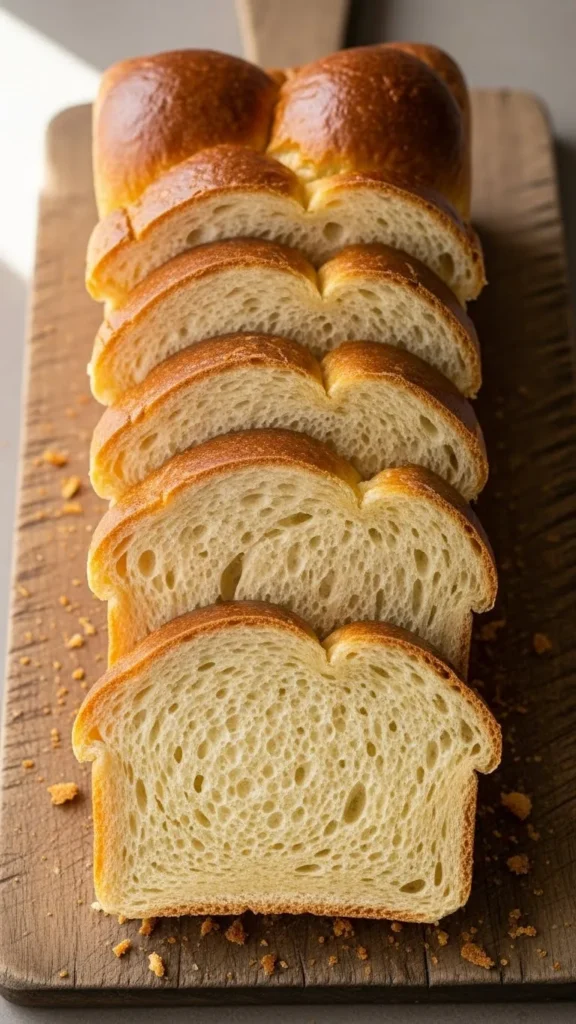
French toast is only as good as the bread you use. The goal is a slice sturdy enough to soak up custard without falling apart.
Best bread choices:
- Thick-cut brioche
- Challah
- Texas-style white bread
- Day-old bakery loaves
Fresh bread absorbs too quickly and turns mushy. Slightly stale bread creates structure and holds the custard where it belongs—inside the slice.
Pro tip:
Slice your bread about ¾ to 1 inch thick. Thin slices cook fast but won’t develop that creamy center.
Build a Rich, Balanced Custard
That golden, creamy center comes from the custard—not just eggs splashed into milk.
Custard basics (for 4 slices):
- 2 large eggs
- ½ cup whole milk or half-and-half
- 1 teaspoon vanilla
- 1 teaspoon sugar or honey
- Pinch of salt
- Optional: cinnamon or nutmeg
Why this works:
- Eggs give structure and richness
- Dairy softens the eggs and prevents dryness
- Sugar helps with browning
- Salt balances sweetness and enhances flavor
Whisk until smooth, but don’t overbeat. You want a unified custard, not a frothy foam.
Soak—Don’t Drown—the Bread
This is where many batches go wrong. French toast needs time to absorb, but not so much that it collapses.
How to soak properly:
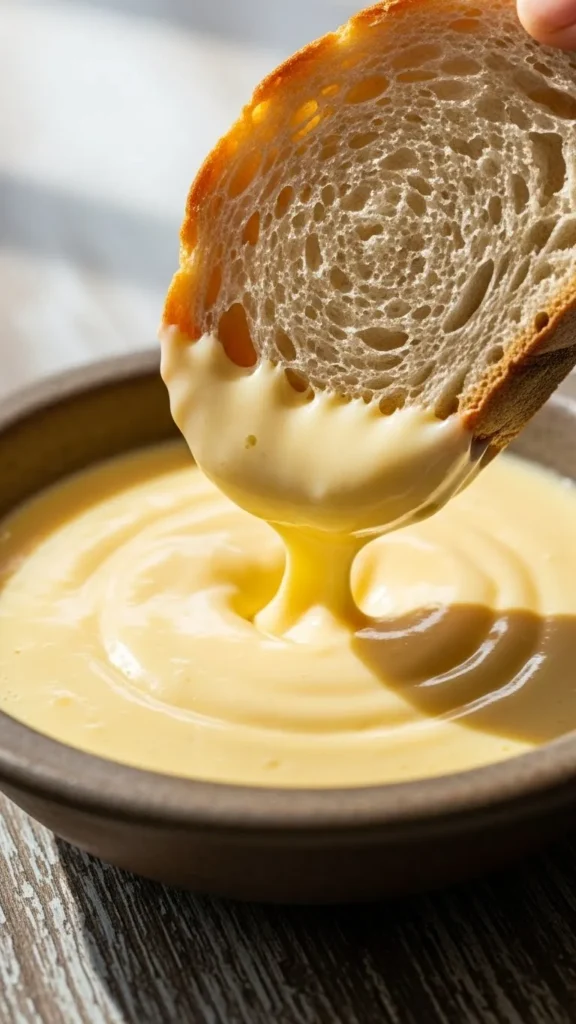
- Dip each slice for 15–20 seconds per side
- Let excess custard drip off before cooking
- Thicker bread may need a few extra seconds
If the bread feels heavy and limp, it’s over-soaked. You want it saturated but still structured.
Cook Low and Slow for Even Goldenness
High heat is the enemy of custardy French toast. It browns the outside too fast and leaves the inside undercooked.
Best cooking setup:
- Nonstick or well-seasoned skillet
- Medium-low to medium heat
- Butter added just before cooking
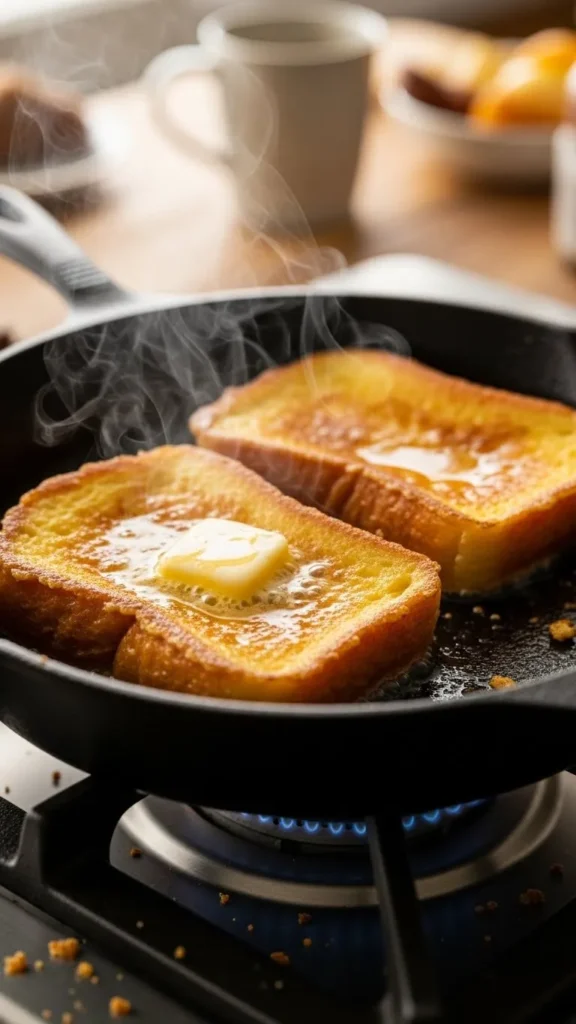
Let the pan heat fully before adding the bread. When the butter gently sizzles (not browns), you’re ready.
Cooking tips:
- Cook 3–4 minutes per side
- Flip only once
- Press lightly with a spatula to ensure full contact
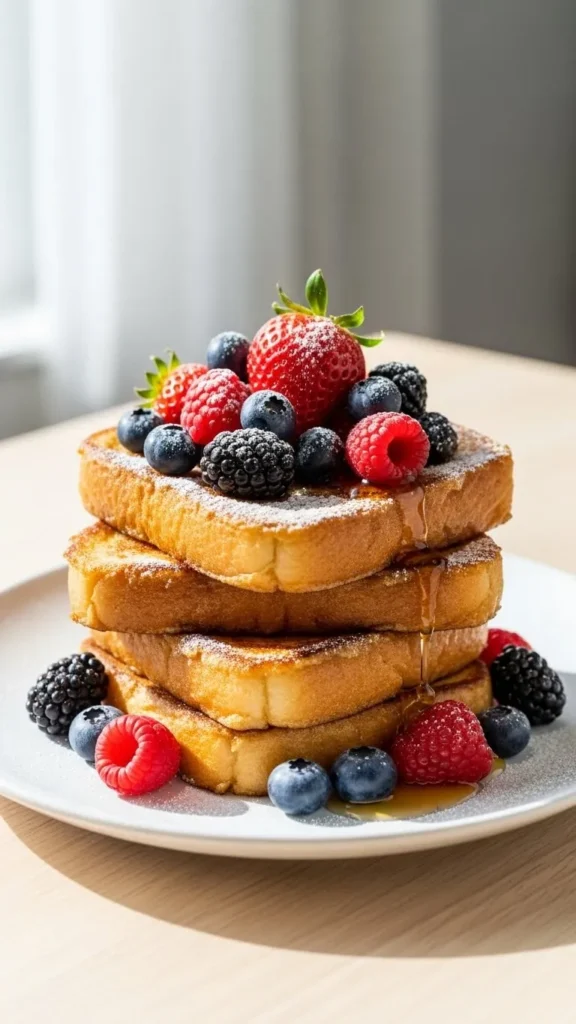
The toast should turn evenly golden, with a soft interior that feels set but tender.
Finish Gently and Serve Warm
Once cooked, transfer French toast to a warm plate or a low oven (around 200°F) while finishing the rest of the batch. This keeps everything warm without drying it out.
Simple topping ideas:
- Butter and maple syrup
- Fresh berries
- Powdered sugar
- Sliced bananas
- Light fruit compote
Avoid piling on cold toppings that cool the toast too quickly. Warm toppings keep that custardy center perfect.
Common Mistakes to Avoid
Even experienced cooks slip up sometimes.
Watch out for these:
- Too much egg, not enough milk: results in scrambled centers
- High heat: burns the outside before the inside sets
- Thin bread: dries out quickly
- Skipping salt: flavors taste flat
Fixing just one of these can dramatically improve your results.
Make It Your Own
Once you’ve mastered the basics, experiment with:
- A splash of cream for extra richness
- Citrus zest for brightness
- Warm spices for seasonal flavor
French toast is forgiving once you understand the balance—and endlessly customizable.
Final Takeaway
Golden, custardy French toast isn’t about fancy ingredients. It’s about balance, patience, and gentle heat. Get those right, and every slice will feel like a special occasion.
Save this recipe for later, and treat yourself to better mornings—one perfect slice at a time.

Leave a Reply